
Pakistan’s climate puts real pressure on buildings. Summers bring intense heat that pushes indoor temperatures up, winters bring cold that raises heating costs, and monsoon rains test every roof and wall for leaks. This is exactly why PU spray foam insulation has become one of the most trusted solutions for homeowners, factory owners, and builders across the country. It insulates and waterproofs a structure at the same time, which is difficult to achieve with older insulation materials.
This guide explains what PU spray foam insulation is, how it works, where it is used, and what property owners should know before choosing it for their project. The goal is simple: to give you accurate, practical information so you can make an informed decision, whether you manage a home, a warehouse, or an industrial facility.
What is PU Spray Foam Insulation?
PU spray foam insulation, short for polyurethane spray foam insulation, is a liquid insulation material that is sprayed onto a surface using specialised equipment. Within seconds, it expands and hardens into a solid foam layer that sticks firmly to roofs, walls, ceilings, and metal structures.
Unlike traditional insulation boards or rolls, spray foam insulation is applied wet and cures on-site. This allows it to fill every gap, corner, and joint, creating a continuous thermal and moisture barrier with no seams. This single property is why polyurethane spray foam is widely considered one of the most effective forms of building insulation available today.
How PU Spray Foam Insulation Works
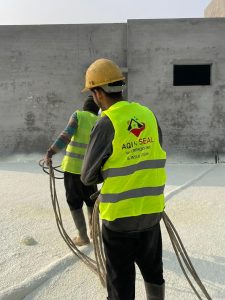
PU spray foam insulation is made from two liquid components, commonly called Part A (isocyanate) and Part B (polyol resin). When these two chemicals are combined at the nozzle of a spray gun, a chemical reaction begins immediately. The mixture expands up to 30 to 60 times its original liquid volume and hardens into a rigid or semi-rigid foam within seconds.
This foam layer works as a thermal barrier in three ways:
- It blocks conductive heat transfer through the building envelope.
- It stops air leakage, which is one of the biggest causes of heat gain and heat loss.
- Closed cell variants also resist moisture, adding a waterproofing function to the insulation layer.
Because the foam expands to fill cracks, gaps, and uneven surfaces, it performs better than materials that rely on flat sheets or rolls placed against a surface.
Types of Spray Foam Insulation
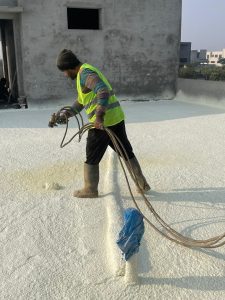
Closed Cell Spray Foam
Closed cell spray foam has a denser structure where the foam cells are tightly packed and sealed shut. This gives it a higher R-value per inch, strong structural rigidity, and excellent resistance to water. Closed cell spray foam insulation is the preferred option for roofs, warehouses, cold storage units, and any application where waterproofing performance matters as much as thermal insulation.
Open Cell Spray Foam
Open cell spray foam has a lighter, softer structure with cells that remain open. It is more flexible, offers good sound absorption, and works well for interior walls and ceilings where moisture exposure is limited. It typically costs less than closed cell foam but offers a lower R-value per inch and does not provide the same level of moisture resistance.
Key Benefits of PU Spray Foam Insulation
- Superior thermal insulation that reduces indoor heat gain in summer and heat loss in winter.
- Seamless application that eliminates gaps, joints, and thermal bridges common in traditional insulation.
- Added waterproofing and moisture protection, especially with closed cell spray foam.
- Long-term energy savings through lower cooling and heating loads.
- Improved structural rigidity, particularly on metal roofs and industrial buildings.
- Fast installation compared to layered insulation systems, reducing project downtime.
- Reduced noise transmission, especially with open cell spray foam.
These benefits explain why polyurethane spray foam is increasingly specified by architects and contractors for both new construction and retrofit projects across Pakistan.
Applications of PU Spray Foam Insulation

PU spray foam insulation is used across a wide range of building types because it adapts to almost any surface shape.
- Residential Buildings: roofs, terraces, and ceilings in homes to reduce indoor heat and prevent water seepage.
- Commercial Buildings: offices, retail spaces, and hotels where consistent indoor temperature and energy efficiency matter.
- Industrial Buildings: factories and production units that need thermal insulation and protection for equipment and materials.
- Warehouses: large roof spans where seamless insulation reduces heat buildup and prevents leaks.
- Factories: process areas that need stable temperatures and protection from moisture damage.
- Cold Storage: facilities where maintaining low internal temperatures depends on a strong thermal barrier.
- Dairy Farms: shelters where temperature control affects animal health and milk production.
- Poultry Farms: sheds where consistent internal temperature directly affects bird health and growth.
- Roofs, walls, ceilings, and metal buildings: surfaces that benefit most from a seamless, adhesive spray application.
Why PU Spray Foam Is Ideal for Pakistan’s Climate
Pakistan experiences extreme summer heat in most regions, heavy monsoon rainfall, and cold winters in the north. This combination creates two separate challenges for buildings: heat management and moisture control. Most traditional insulation materials only address one of these problems well. PU spray foam insulation addresses both at once, which is a major reason it has become popular among homeowners and industrial facility owners across Pakistan.
On metal roofs, which are common on factories and warehouses in Pakistan, spray foam insulation also helps reduce noise from rain and reduces the expansion and contraction stress that metal sheets experience during temperature swings.
Energy Saving Benefits
A building loses and gains heat mainly through its roof and walls. When PU spray foam insulation is applied correctly, it significantly reduces heat transfer through these surfaces. This means air conditioners and heaters do not have to work as hard to maintain a comfortable indoor temperature.
Over time, this translates into lower electricity bills. For industrial and commercial buildings, this reduction in HVAC energy consumption can be substantial, given the size of the roof and wall area typically involved.
Waterproofing and Moisture Protection
Closed cell PU spray foam insulation is naturally water resistant because its tightly sealed cell structure does not absorb water. When applied to a roof or terrace, it acts as both a thermal insulation layer and a waterproofing membrane in one application.
This dual function is particularly valuable in Pakistan, where monsoon rains can cause roof leaks and water seepage into walls and ceilings. Structural waterproofing solutions, roof waterproofing, and moisture protection are often discussed alongside spray foam insulation because they solve related problems: keeping water out of the building envelope while maintaining thermal performance.
Heat Reduction During Summer
During Pakistan’s hot summer months, roofs absorb intense solar heat, which then radiates into the building below. PU spray foam insulation creates a thermal barrier that slows this heat transfer significantly. Property owners often notice a measurable drop in indoor temperature after proper application, along with reduced dependence on air conditioning during peak summer hours.
Long-Term Durability
When installed correctly by trained applicators using quality materials, PU spray foam insulation can last 20 to 30 years or longer. Its durability depends on several factors:
- The quality of the polyurethane material used.
- Correct mixing ratio and spray thickness during application.
- Surface preparation before spraying.
- Whether a protective top coating is applied over the foam to shield it from UV exposure.
This is worth emphasising because spray foam insulation that is applied incorrectly, or without a protective coating, can degrade faster than expected. Material quality and applicator training genuinely affect how long the insulation performs well.
Installation Process
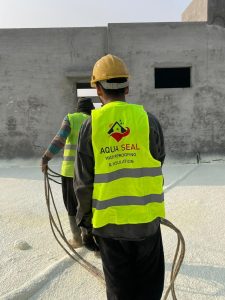
A professional PU spray foam insulation project typically follows these steps:
- Site Inspection: the applicator inspects the roof, wall, or ceiling to assess surface condition, existing leaks, and structural details.
- Surface Preparation: the surface is cleaned of dust, oil, and loose material, and any existing damage is repaired so the foam bonds properly.
- Masking and Protection: nearby fixtures, vents, and edges are masked to protect them from overspray.
- Spraying the Foam: the two-component polyurethane mixture is sprayed in controlled layers to reach the required thickness.
- Curing: the foam expands and hardens within seconds, though full curing can take a short additional period depending on temperature and humidity.
- Quality Check: thickness and coverage are inspected to confirm the application meets the required specification.
- Protective Coating: a UV-resistant top coat, such as a polyurethane waterproof coating or polyurea coating, is applied to protect the foam from sun exposure and mechanical wear.
This process should always be carried out by trained applicators, since incorrect mixing ratios, spray thickness, or curing conditions directly affect the final performance of the insulation.
Common Mistakes to Avoid
- Skipping surface preparation, which leads to poor adhesion and early foam failure.
- Applying foam in unsuitable weather conditions, such as high humidity or rain.
- Using low-quality or diluted polyurethane material to cut costs.
- Applying foam without a protective UV coating, leaving it exposed to sun damage.
- Hiring untrained applicators who are unfamiliar with correct spray thickness and mixing ratios.
- Ignoring existing roof leaks or structural issues before installation.
PU Spray Foam vs Traditional Insulation
The table below compares PU spray foam insulation with traditional insulation materials such as glass wool, rock wool, and polystyrene boards.
| Feature | PU Spray Foam Insulation | Traditional Insulation |
| Air Sealing | Seamless, fills gaps and cracks | Leaves joints and gaps |
| R-Value per inch | Higher (especially closed cell) | Lower, depends on material thickness |
| Moisture Resistance | Closed cell foam resists water | Most materials absorb moisture |
| Installation Time | Fast, sprayed directly on site | Slower, cut-and-fit process |
| Lifespan | 20-30+ years when installed correctly | Varies, often needs earlier replacement |
| Upfront Cost | Higher initial investment | Generally lower upfront cost |
| Best For | Roofs, irregular surfaces, metal buildings | Standard walls, budget projects |
Maintenance Tips
- Inspect the insulated roof or wall surface at least once a year for visible cracks or wear.
- Reapply the protective top coating every few years, depending on sun exposure and coating type.
- Clear debris, standing water, or vegetation from insulated roof surfaces regularly.
- Address any minor surface damage quickly to prevent water from reaching the foam layer.
- Schedule a professional inspection after extreme weather events, such as heavy storms.
Signs You Need New Insulation
- Rising indoor temperatures during summer despite regular air conditioning use.
- Visible cracking, peeling, or bubbling on the insulated surface.
- Water stains or leaks appearing on ceilings or walls.
- A noticeable increase in energy bills without a change in usage habits.
- Foam that feels soft, crumbly, or detached from the surface it was applied to.
Frequently Asked Questions
1. What is PU spray foam insulation used for?
It is used for thermal insulation and waterproofing on roofs, walls, ceilings, and metal buildings in residential, commercial, and industrial settings.
2. Is PU spray foam insulation waterproof?
Closed cell PU spray foam is naturally water resistant, and when combined with a protective top coating, it provides strong waterproofing performance.
3. How long does PU spray foam insulation last?
With correct installation and periodic maintenance, it can last 20 to 30 years or more.
4. What is the difference between open cell and closed cell spray foam?
Closed cell foam is denser, offers a higher R-value, and resists water. Open cell foam is softer, lighter, and offers good sound absorption but less moisture resistance.
5. Does PU spray foam insulation reduce electricity bills?
Yes, by reducing heat transfer through roofs and walls, it lowers the workload on air conditioning and heating systems, which can reduce energy costs over time.
6. Is PU spray foam insulation suitable for factories and warehouses?
Yes, it is widely used on industrial and warehouse roofs because it insulates large surfaces seamlessly and helps control temperature in production and storage areas.
7. How is PU spray foam insulation installed?
It is applied by trained applicators using spray equipment that mixes two liquid components, which expand and harden into foam directly on the surface.
8. Does PU spray foam insulation need maintenance?
Yes, though maintenance needs are low. Periodic inspection and reapplication of protective coating help maintain long-term performance.
9. Can PU spray foam insulation be applied over an existing roof?
In many cases, yes, provided the existing surface is properly cleaned, repaired, and prepared before application.
10. What should I check before hiring a spray foam insulation contractor?
Ask about the quality of the polyurethane material, the applicator’s training and experience, and whether a protective top coating is included in the service.
Conclusion
PU spray foam insulation offers a practical answer to two challenges that Pakistani property owners face at the same time: extreme heat and water damage. Its seamless application, strong thermal performance, and waterproofing properties make it a suitable choice for homes, factories, warehouses, and commercial buildings alike.
That said, performance depends heavily on material quality and correct installation. Property owners considering PU spray foam insulation should consult experienced insulation and waterproofing professionals who can assess their specific building, climate exposure, and structural needs before recommending the most suitable system.